
Skip to content

How it works

The study comes first, then three phases, and then your deed.

We provide all the professional services required to convert your property, from beginning to end, including shareholder education, legal, financial and administrative services. What follows is what happens in each part of that work, what your board reviews, and what your shareholders decide.

Cooperative units converted
5,000+
Value appreciation for shareholders
$550M+
Of shareholder-approved conversions completed
100%
Converting co-ops nationwide since
1992
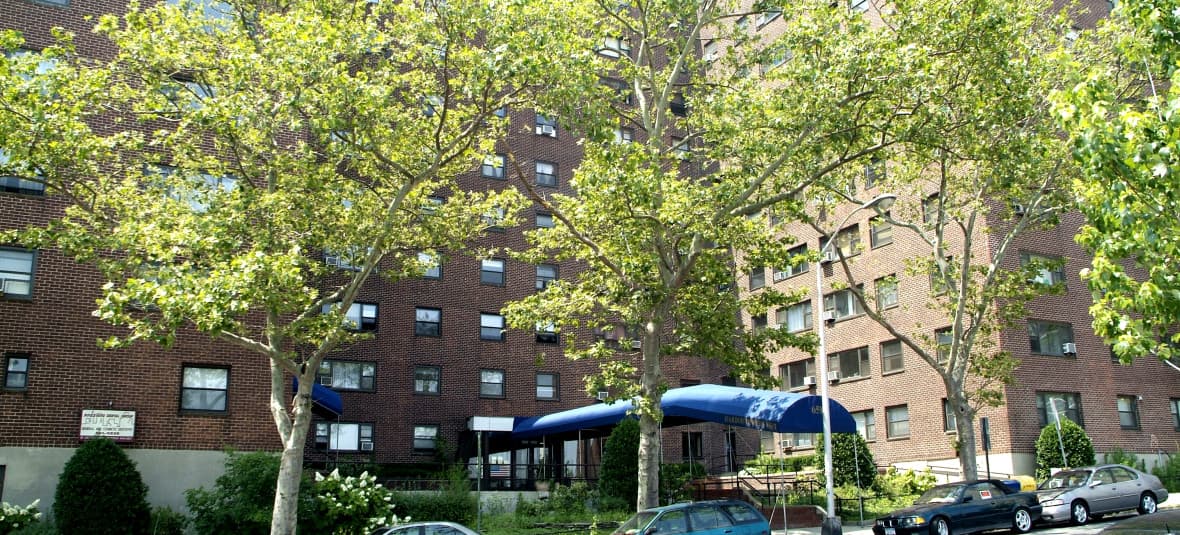
Harbor Towers, West New York, NJ

Converted

Harbor Towers, West New York, NJ

198 units

The feasibility study

We can begin with a feasibility study of your cooperative at no cost or obligation to your board or your members. In it we appraise sample units as condominiums and analyze your governing documents for the approval your conversion plan will need. We review your cooperative's finances as well, including its underlying loan, and we present the findings to your board in person. If your cooperative is a good candidate we offer you a no-risk agreement with no up-front cost, and your own attorney should review it. Not every cooperative is a good candidate, and if yours is not we will say so to your board, at no charge.

Phase One

Phase One is education and the vote. We meet your shareholders in large and small group sessions, and one on one with each household and its own advisers. Every owner receives an Individual Unit Analysis, which compares the values, the monthly costs and the financing options before and after the conversion. Then the shares are counted at a special meeting of the shareholders, called as your governing documents and your state's statutes require. Under most governing documents and state statutes, two-thirds of the shares must approve the plan, and an abstention counts as a vote against. The decision is your shareholders', not your board's, and your board's part is to review the options and bring the question before them.

Two thirds of the shares

Weighted by share. An abstention counts as a vote against.

Phase Two

Phase Two builds the condominium, and it starts with the new association's governing documents, drafted by outside counsel we engage. Those documents begin by mirroring the rules and procedures you have now, and they are fine-tuned where your community wants that. We highlight the passages where your board has discretion, and your board reviews and redrafts them before adopting a final version. We obtain the state and local approvals your building needs, and we apply for Fannie Mae, Freddie Mac and FHA approval for the building. We prepare the condominium's first-year operating budget and we arrange each owner's financing, though every owner is free to choose their own lender.

Phase Three

Phase Three is the group closing, and it is where each of your shareholders becomes the owner of their own unit. The underlying mortgage is paid off out of each owner's own financing rather than the corporation's funds, and the deeds are delivered. Owners who do not close with the majority close later as deferred participants, and their share of the building's debt is financed for them. Your board members can remain on the board of the condominium, and all your rules and regulations can be carried over as well.

Questions boards and shareholders ask

What does our board actually do while the conversion is running?

Your board's own work is review and approval, and it falls at a handful of points rather than running all the way through. We prepare a checklist of the decisions the new governing documents leave to your board's discretion. We ask your board to work through that checklist with us before the drafts are final. Your board reviews every draft and adopts the final version before it goes to your shareholders. Your board holds the authority to execute and to approve all final documents and plans. Between those points the legal, financial and administrative work is ours, and your board is not asked to research it or to fund it.

Who pays for the shareholder education?

We do, and it costs your cooperative nothing. The large and small group sessions, the one-on-one meetings with each household and the Individual Unit Analysis for every unit are all our work. We perform all of it at no upfront charge to the corporation or to your shareholders. We are paid one fixed fee per unit, by each owner at closing, and only when the deed to that unit is delivered. If for any reason we are unable to convert your property, there will be no charge to the co-op or the shareholders for the services rendered. Most of the work of a conversion sits before the vote, which is the point of the arrangement.

What does the fee cover?

One fixed fee per unit, fully disclosed, covers all of the conversion's services and all of its costs. Those are the legal costs, the architectural and engineering fees, the title search, the recording, the document preparation and the administration of the whole conversion. Other than normal financing and closing costs, and only where those apply, your shareholders have no other expense. The fee is treated as an assessment in the resolution your shareholders vote on, and they see the figure before they vote. It is paid at the closing, placed into escrow, and not released to us until the deeds are recorded with the county.

What happens on the day of the group closing?

By then the condominium's governing documents are adopted, the state approvals are in hand, and each participating owner's financing is arranged. The closings are held as a group, unit by unit, and each owner signs for their own unit and their own mortgage. The group closing is scheduled building by building, from a few days to a few weeks, and longer where a building's financing or filings require it. Not every owner closes on the same day. The declaration and each deed are recorded with the county, and from that day your community is a condominium.

What happens to a shareholder who does not close with everyone else?

They are what we call a deferred participant, and they still receive a deed to their unit. Their share of the underlying mortgage, or of any other cooperative obligation, is funded by a new condominium or co-op mortgage. They keep the right to sell the unit as a condominium, or to convert at a later date at a slightly higher cost. We strongly urge every shareholder to convert with the group rather than to wait and defer. The owner who converts with the building chooses their own lender and their own terms. We have never had a conversion where someone has been forced out of their home.

Does our managing agent stay after the conversion?

The conversion itself has no immediate impact on your board or on your management structure. The members of the board remain the same, as do the managing agent and the employees in the complex. Each of those is the community's own decision, and the conversion does not disturb any of them. In most cases you can keep the rules and restrictions you already have, or use the conversion to adopt new ones. In nearly all matters the new condominium is better positioned to enforce those rules than the cooperative is. Your board can regulate tenants and move-in and move-out procedures, and require new owners and occupants to follow all rules.

The study is how your board finds out what a conversion would actually do to your own building and its owners.

Please call us at 800-259-7595, or write to info@huttonfirm.com, and we will send you the short list of information we need. We will then prepare your feasibility study and present the results of it to your board in person. There is no risk or cost to the corporation prior to the closing and our service fees are paid only if there is a successful conversion.