
The building and its units
The study reviews every unit, the ownership's purchase basis and comparable condominium sales before it recommends conversion.
Rental to Condo
An owner converting a rental building has residents in place, and a conversion has to give each of them a decision to make.
How to think about it
A rental conversion begins with the building and ends with an offer to each resident.
The study reviews every unit, the ownership's purchase basis and comparable condominium sales before it recommends conversion.
Condominium documents are drawn, and each unit becomes something a resident can buy with an ordinary mortgage.
Each resident is offered their own unit at a discount before it can be sold to anyone else.
Feasibility questions
The building, the governing documents, the residents and the financing all have to hold together.
01
Unit sizes and layouts are set against nearby condominium sales to gauge demand.
02
A pre-inspection and engineering studies come before the city's and the state's approvals.
03
Existing leases and local rules set what each resident is offered and when.
04
Each resident weighs the cost of owning against what they pay to rent.
Hutton's role
Filing condominium documents is one part of a rental conversion. The lenders, the approvals and the offers to residents are handled alongside it.
Feasibility study of the property and unit mix
The legal and financial work
The condominium documents and approvals
Reserve and engineering studies for the public report
Financing and the closing
The offer to each resident
The process
Everything begins with a study of the building, and the decision rests on it. It sets out the units and their sizes, what the ownership paid for the property, and what comparable condominiums nearby have sold for. In California it names the rules the conversion runs under, from the city's own conversion ordinance to the Subdivision Map Act and the state's public report process. The study ends in a recommendation on whether the building should be converted.
An agreement follows the study, and it divides the work into the conversion itself and everything owed to the residents. On the conversion side, the parcel maps go to the city's planning division, and the application for the state's public report is prepared in full. The architectural, engineering and reserve studies that report has to disclose are commissioned with it. Governing documents are drawn for the new association, and a deed is prepared for every unit.
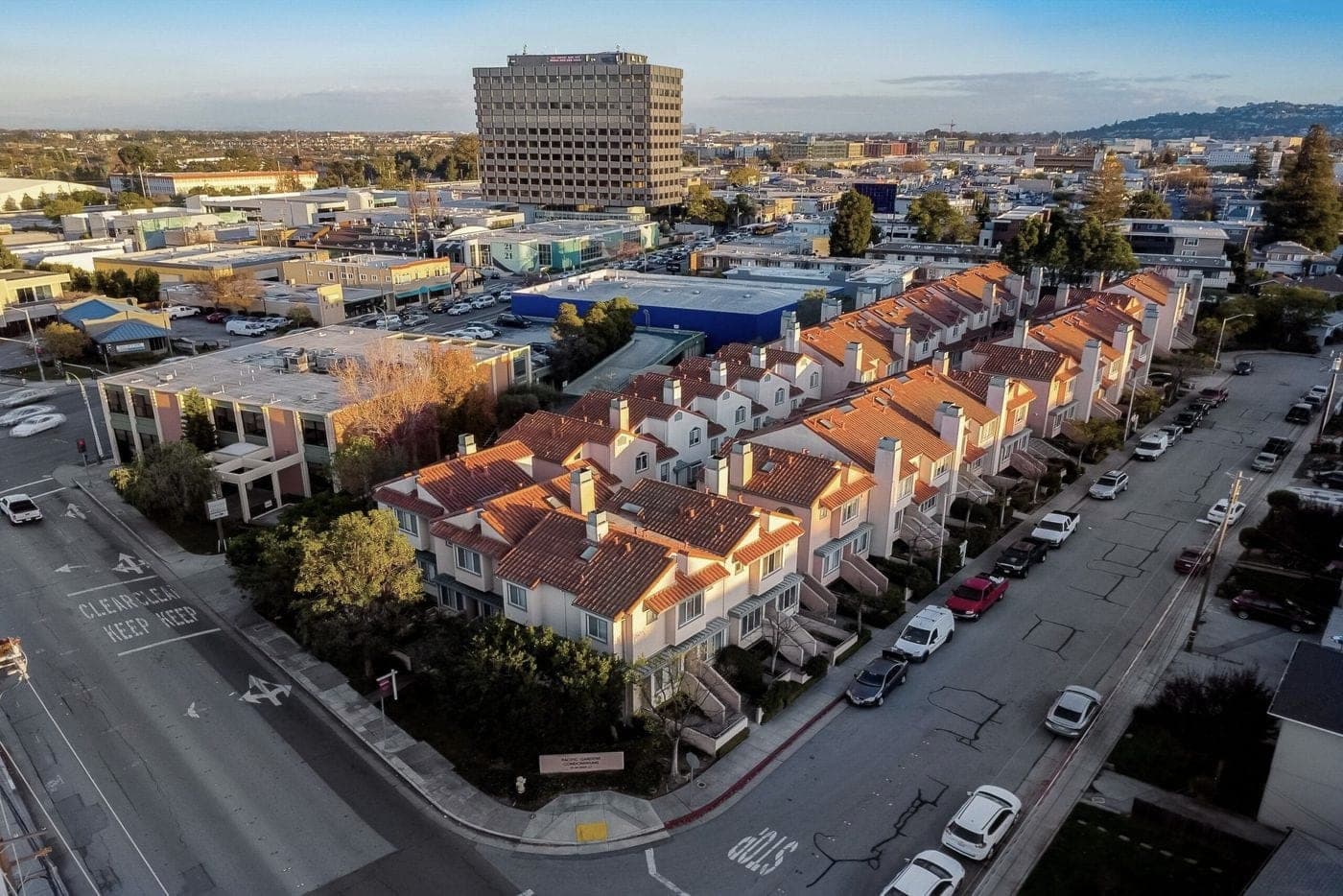
On the residents' side, the certified notice of intent to convert goes out before anything is sold. The period in which residents may buy their own units runs before any unit is offered to anyone else, and vacant units are marketed once the public report issues. Escrow closings follow, and the residents who do not buy keep the rights their leases and the city's ordinance give them. Pacific Gardens in San Mateo was converted on this sequence, thirty-eight units, completed in 2021.
The fee
The schedule of fees is part of the agreement the owner signs, settled before the work starts. What it covers is both halves of the work, from the maps and the public report application to the meetings with residents. The agreement also names what the owner has to provide and do, apart from paying the fee. Where a substantial first deed of trust sits on the property, refinancing it is part of what the plan has to solve.
Either party can end the agreement for an uncured material default, on the other's insolvency, or by mutual written agreement. If a change in the law makes performance illegal or unenforceable, either party can end it after a period of good-faith renegotiation. The amount itself is settled with the owner and lives in that owner's agreement.
The residents
California sets the notices a conversion has to give, and the first of them reaches each household sixty days ahead of the filing. Further notices follow when the public report application goes in and when the final map is approved, and a notice terminating a tenancy runs one hundred and eighty days. Each resident then holds an exclusive right to buy their own unit, ninety days in which that unit cannot be sold to anyone else.
Alongside the statutory notices, each household is met in a group and then on its own. Each resident is given an analysis of their own unit, setting the cost of owning it against the rent they pay now. Some households have longer, because a local ordinance can give a resident who is elderly or disabled the right to stay. Where an ordinance requires a relocation allowance for the households that leave, meeting it is a condition of the conversion.
California's cities do not condition conversions the same way. San Francisco has limited conversions by an annual cap allocated by lottery, and the California page carries what happened to that cap in 2013. Los Angeles conditions conversions under a section of its municipal code written to mitigate the hardship of displacing tenants, and the same page carries the rest.
Tax
Once a property has been divided into condominiums, California assesses each unit separately to its owner, and the tax on a unit is a lien on that unit. Whether converting triggers a reassessment is a separate question. The Board of Equalization's annotation of January 23, 1991 addresses it for a community apartment project and for a cooperative housing corporation, treating the conversion as a change in the method of holding title. It excludes that from change in ownership, and it says of itself that its views are advisory and bind no county assessor. A rental building held by one owner is not the case it addresses, so the county assessor and the owner's adviser answer that.
Each unit's deed carries the county's documentary transfer tax at recording, and a city can add a transfer tax of its own. California has no state mortgage recording tax and no documentary stamp tax on the mortgage itself. Everything beyond that belongs to the owner's own tax adviser.
Next step