
FAQ · Ownership Structure

Can a Co-op Sell Its Air Rights to Pay for a Conversion?

A co-op sitting on unused development rights may be holding an asset it has never valued. Here is how air rights work, what a sale involves, and how the proceeds interact with a conversion.

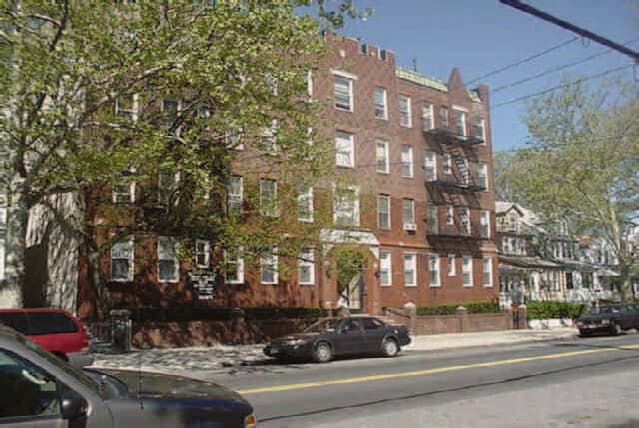
109-18 Lefferts Condominium residential property in Queens
Written by Jack Boyajian, PresidentLast reviewed: September 6, 2026

What are air rights, exactly?

Zoning sets a maximum amount of floor area that can be built on a given lot. A building that was constructed below that maximum has unused development rights, commonly called air rights. They are an asset attached to the land, and in dense markets, particularly New York City, they can carry real value. Many older co-ops are well below their permitted floor area because they were built under earlier zoning or simply never expanded. Those buildings are holding something they have usually never appraised.

How does a co-op actually sell them?

The common mechanism in New York City is a zoning lot merger. An adjacent or nearby property owner, often a developer who wants to build larger than their own lot permits, combines their zoning lot with yours on paper and takes the unused floor area with them. Your building does not change physically. The transaction is a legal and zoning exercise. It requires a zoning analysis to establish how much unused floor area exists, an appraisal to establish what it is worth, counsel to paper the merger and the easements that go with it, and in nearly every case a shareholder vote. What threshold applies depends on your proprietary lease and bylaws, and it is often higher than a simple majority because the board is disposing of a building asset.

Why would a board look at this now?

Usually because a large capital bill has arrived. A facade cycle under Local Law 11, an emissions penalty under Local Law 97, an energy audit under Local Law 87, or a gas-piping inspection under Local Law 152 can each produce a number the building has no reserve for. When a board is choosing between a special assessment, a maintenance increase, and new debt, an unused asset sitting on the zoning lot is worth knowing about before that decision gets made.

Can the proceeds fund a conversion?

They can contribute to one, and in the right building they can cover a meaningful share of the capital work that prompted the conversation in the first place. Whether they cover the conversion itself depends entirely on the size of the unused floor area, the market for it in your immediate area, and what the building needs the money for. Some buildings have no meaningful unused rights. Some have enough to change what the board can consider. The practical sequence is to establish what the rights are worth before building any plan around them. A zoning analysis and an appraisal usually take weeks and produce an actual number to plan against.

What does conversion change about air rights?

It changes who controls them. In a co-op, the corporation owns the building and the land, and the board acts for the shareholders in disposing of an asset like development rights. After a conversion, the condominium's declaration governs what happens to any remaining development rights and how a future sale would be authorised. This is one of the details worth settling deliberately in the declaration; a building that sells rights before a conversion and a building that sells them after are in materially different positions. If a building is considering both a rights sale and a conversion, the order matters. That is a question for counsel and for the feasibility work, not something to decide informally.

What should a board do first?

Find out whether the building has unused development rights at all, and roughly what they are worth. That is a discrete, low-cost piece of diligence, and it is worth doing before any assessment vote, not after. A board that knows the number can weigh a rights sale against an assessment, against debt, and against a conversion. A board that does not know is choosing between options without knowing what it owns.

Track record on this topic

Hutton’s conversion model is built so that a co-op and its shareholders do not fund the process out of pocket. A building with sellable development rights has an additional lever, and it is worth understanding both before deciding how to handle a capital shortfall. A feasibility study is the right place to look at the two together, because the answer depends on the building’s specific zoning, its capital needs, and its governing documents.

See also: What does condo conversion cost? · How the conversion process works · New York

Ready to talk specifics?

Turn this into a building-specific conversation

A feasibility study gives your board a real, deal-specific answer, at no cost to start.