
FAQ · Tax & Legal

New Jersey Condo Conversion Law: What Boards and Owners Need to Know

New Jersey conversions run through the state PRED program, a tenant notice requirement, and a Hudson County carve-out on affordable rental stock. Here's how it actually works.

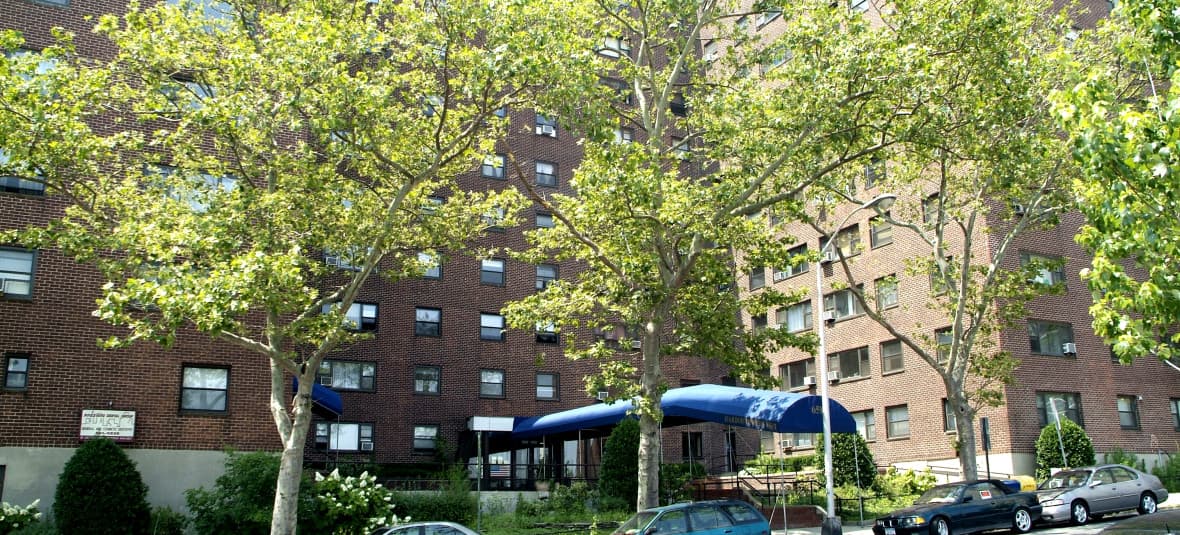
Harbor Towers residential property in West New York, NJ
Written by Jack Boyajian, PresidentReviewed by Jack Boyajian, PresidentLast reviewed: September 6, 2026

What state agency governs a New Jersey conversion?

New Jersey conversion offering plans register through the Department of Community Affairs' Planned Real Estate Development Full Disclosure Act program, commonly called PRED. Every conversion offering plan in the state, whether it's a co-op in Hackensack or a rental building in Edison, files through this same program.

Are tenants entitled to advance notice before a conversion?

Yes, and the periods are long enough that they shape the schedule rather than sit at the edge of it. New Jersey's Anti-Eviction Act protects tenants from eviction due to a condominium conversion for at least three years, and potentially longer depending on the circumstances. An owner must then give tenants who choose not to buy a three-year notice to vacate. Senior and disabled tenant protections layer on top of the general notice rule, and buildings containing affordable-housing units carry their own carve-outs. The exact periods that apply to your building turn on its specific circumstances and should be confirmed against the current statute for your deal. If you own a rental building in New Jersey and are weighing a conversion, this timeline is usually the governing constraint on the plan, which is a reason to establish it early rather than late. Working out where your building actually sits is part of what a feasibility study does, and it costs nothing.

Is there a restriction specific to Hudson County?

Yes, and it's worth knowing before you assume New Jersey's rules apply uniformly statewide. Since June 2020, New Jersey law (P.L. 2020, c.40, amending the Tenant Protection Act of 1992) has let qualifying Hudson County municipalities, those with an adopted rent control ordinance and sufficient population density, pass a local ordinance banning the conversion of rent-controlled rental units to condominium or cooperative form. This targets rent-controlled rental housing specifically; it does not restrict co-op-to-condo conversions of market-rate buildings. Two of Hutton's own completed New Jersey deals, Harbor Towers (West New York) and Park Hudson (North Bergen), are in Hudson County. Both closed well before this law existed, Harbor Towers in 2001 and Park Hudson in 2009, so it could not have applied to either transaction. If your building sits in Hudson County, this is worth establishing early rather than assuming either way. It is a per-municipality question and it turns on your building's specific designation, which is exactly the kind of thing a feasibility study settles. Bring it to us and we will tell you where your building stands before you spend anything.

Under legal review. This building’s statutory characterization (P.L. 2020, c.40’s actual “qualified municipality” density test, rather than a Hudson County carve-out, and the statute’s §4(d) null-and-void consequence) has not yet been confirmed by counsel. The passage above is published as drafted pending that review.

Does New Jersey have anything like New York's recent law changes?

Not really. New York has been changing its offering-plan rules for rental conversions; New Jersey has not enacted an equivalent. New Jersey's most significant recent conversion-adjacent activity is the Hudson County municipal-ban authority (P.L. 2020, c.40) described above, which moves in the opposite direction: restricting conversion for a specific building category rather than easing it. If you have read something about New York and wondered whether it reaches your New Jersey building, ask us. It usually does not, and the answer takes one conversation.

What does this mean practically for a New Jersey board or owner?

The process runs on a well-established, decades-old state framework (PRED) rather than a newly changing one, with the one real recent wrinkle being the Hudson County affordable-stock restriction. For most of Hutton's New Jersey work, concentrated in Bergen County (Hackensack, Fort Lee) and market-rate buildings elsewhere in the Hudson County corridor, the governing rules haven't shifted the way New York's have. We still check every building's specific municipal and affordability status before treating any conversion as a given.

Track record on this topic

13 completed New Jersey conversions, 2,020 units, including two in Hudson County (Harbor Towers, closed 2001, and Park Hudson, closed 2009), both completed years before the current restriction existed. Jack Boyajian, Hutton’s President, has led Hutton’s conversion practice since Hutton’s first New Jersey deal in 1992 and has converted more than 7,500 units across his career.

See also: New Jersey · Hackensack · What does conversion cost?

Ready to talk specifics?

Turn this into a building-specific conversation

A feasibility study gives your board a real, deal-specific answer, at no cost to start.